
Class II Biological Safety Cabinets (BSCs) are the most widely used containment solution in laboratories across healthcare, pharmaceutical, research, and cleanroom environments. Designed to protect the operator, the product, and the surrounding environment, they are essential for safely handling microbiological materials.
However, not all Class II cabinets are the same. Differences in airflow design, performance, usability, and engineering can have a significant impact on safety, efficiency, and long-term value.
This guide explains everything you need to know, from how Class II cabinets work, to how to choose the right system for your laboratory.
What is a Class II Biosafety Cabinet?
A Class II Biological Safety Cabinet is a ventilated enclosure that uses HEPA filtration and controlled airflow to provide three levels of protection:
- Operator protection from hazardous aerosols
- Product protection from contamination
- Environmental protection through filtered exhaust air
Air is drawn into the front grille, filtered, and recirculated as laminar airflow across the work surface, while contaminated air is captured and filtered before being exhausted.
Where Are Class II Cabinets Used?
Class II Biosafety Cabinets are used across a wide range of applications:
- Clinical and NHS laboratories
- Pharmaceutical and biotech production
- Academic and university research
- Cleanroom and controlled environments
Their versatility makes them the standard choice for handling microbiological work safely.
How to Choose the Right Class II Biosafety Cabinet
Selecting the right cabinet depends on several key factors:
Laboratory Space
- Limited space: Compact solutions such as the Ultrasafe 60
- Standard lab environments: a cabinet from our Ultrasafe Class II range
Performance Requirements
- Routine work: Standard Class II cabinets e.g. the Ultrasafe range
- High-performance or sensitive applications: Advanced systems with enhanced airflow control e.g. the Ultima
User Experience & Ergonomics
- Noise levels
- Ease of operation
- Accessibility and comfort for long-term use
Future-Proofing
- Digital monitoring
- Reliability of mechanical systems
- Long-term maintenance requirements
AES Environmental Class II Biosafety Cabinet Range
AES Environmental offers a range of Class II Biosafety Cabinets designed to meet different laboratory needs:

Ultrasafe 60
Compact Class II BSC
Compact solution for space-constrained environments.

Ultrasafe
Class II BSC
Reliable, compliant systems for general laboratory use.

Maxi Ultrasafe
Class II Robotic BSC
Specialist solution for automated and robotic applications.
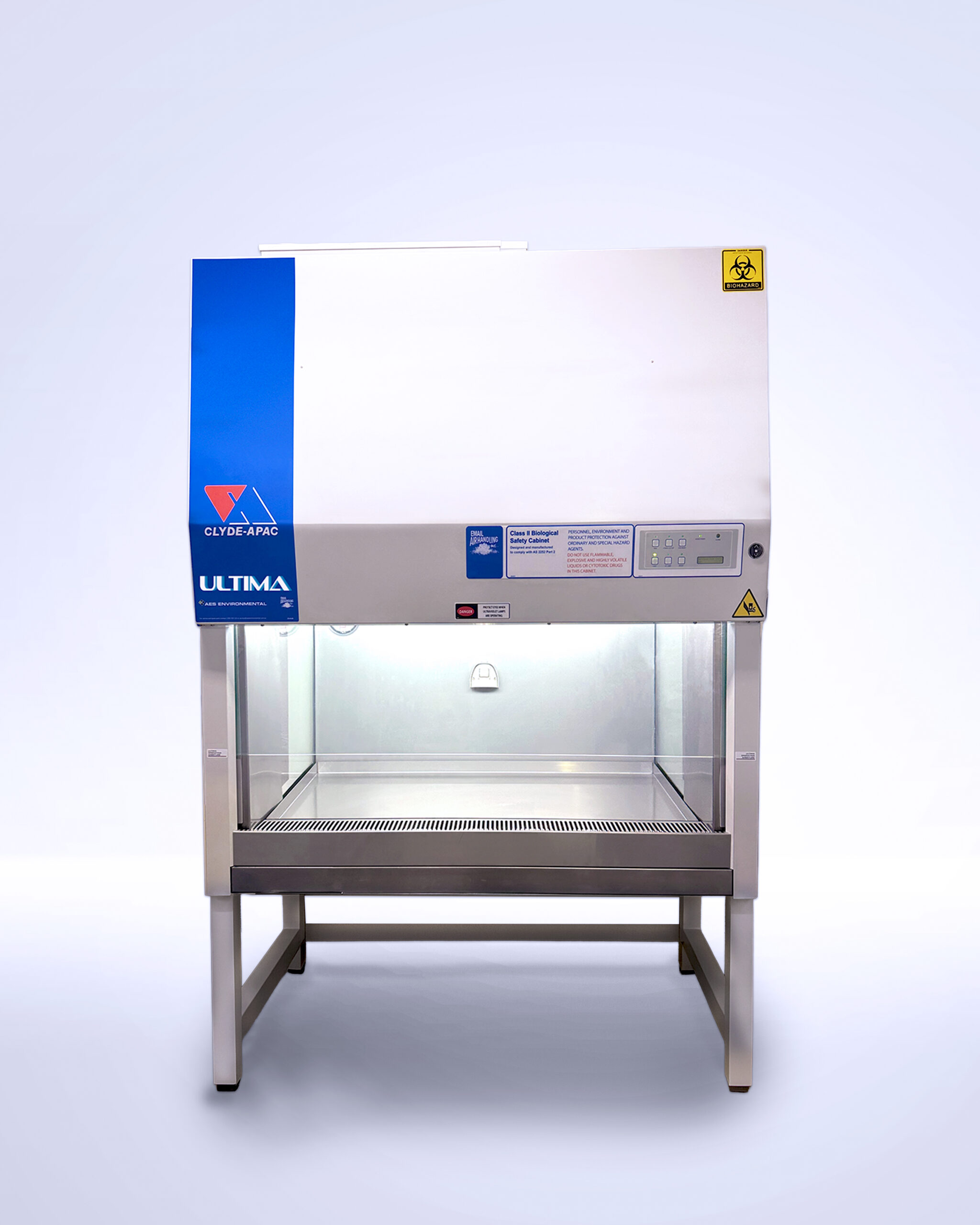
Ultima
Class II BSC
For laboratories requiring the highest levels of performance, control, and reliability, our most advanced solution in the range.
Compliance and Standards
In the UK, Class II Biosafety Cabinets must comply with BS EN 12469 ensuring:
- Verified airflow performance
- Effective containment
- Safe operation under defined conditions
Regular testing and certification are essential to maintain compliance and ensure ongoing safety.
Why Cabinet Design Matters More Than Ever
While filtration and airflow are critical, modern biosafety cabinet design increasingly focuses on:
- User safety and ergonomics
- Reliability of mechanical systems
- Ease of monitoring and maintenance
Advances in cabinet engineering, particularly in airflow control and mechanical components, are helping laboratories reduce risk and improve operational consistency.
Speak to a Biosafety Cabinet Specialist
Choosing the right Biological Safety Cabinet is not just about specifications, it’s about ensuring the system fits your laboratory, your workflows, and your safety requirements.
At AES Environmental, we can help you:
- Identify the right Class II cabinet for your application
- Ensure compliance with UK standards
- Future-proof your laboratory investment
Click here to request expert advice or click here to explore our full biosafety cabinet range.